Havasu Falls sits inside Havasupai Indian Reservation, so the walk in comes with the park around it: marked trails, signed junctions and, usually, other things worth a stop on the same day.
The draw here is the moment the sound reaches you before the water does. People plan whole days around falls like Havasu Falls: a walk through the woods, cold spray at the base, and a quiet spot to sit for a while.
Geology and background
What makes it special
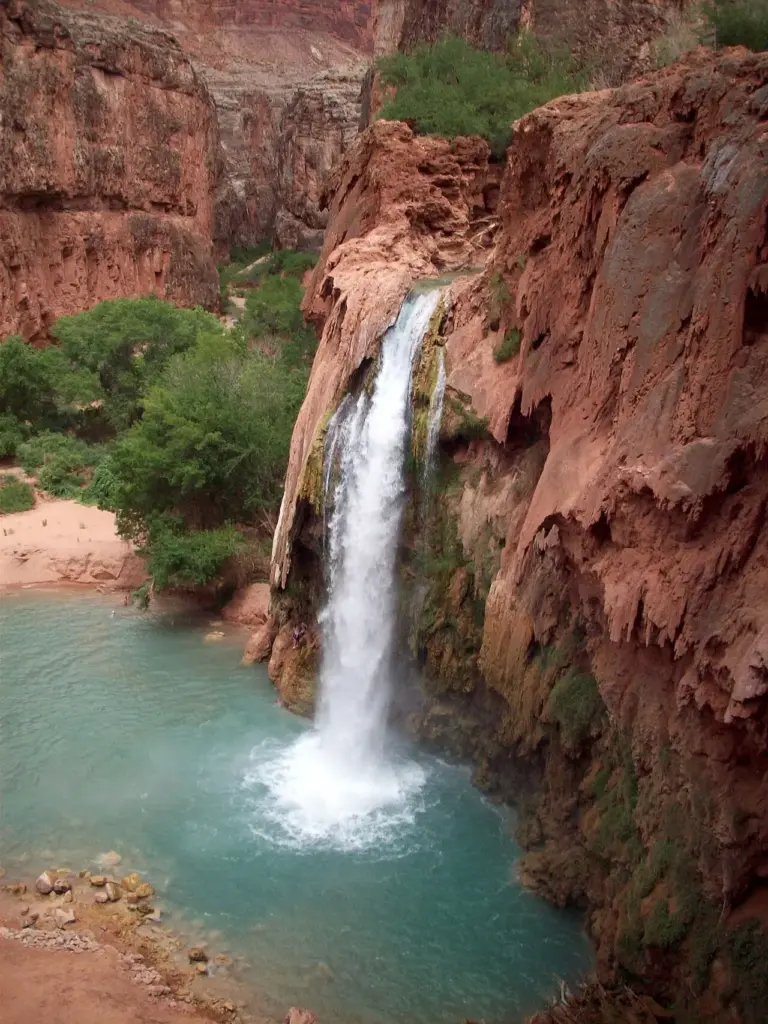
Blue-green water falling into travertine pools in Havasu Canyon, on the Havasupai Indian Reservation. There is no road in and no day visit — every trip is a multi-day permitted stay, hiked in from Hualapai Hilltop.
Plan your visit
Getting there and parking
Trailhead: Hualapai Hilltop, about 60 miles north on Indian Road 18 from Route 66; 8-mile hike to Supai Village and 2 more miles to the campground; no road to Supai.
Prices and passes
Reservations: NO day hiking – reservations required before entry, every booking is 4 days/3 nights; check in at Grand Canyon Caverns & Inn the day of or day before, with photo ID; wristband must be worn; vehicle parking permit required.
Facilities
Facilities: Composting toilets in the campground, spring drinking water in the campground (treat all other water), store and cafe open 8am-5pm daily; no public health services.
Best time and crowds
No day hiking — every visit is a multi-day permitted stay.
How long to spend
Allow 4 days and 3 nights — that is the only booking the Tribe offers.
Where to stay nearby
Sleep only in the permitted campground or the lodge; there is no other lodging at the falls. Check in at Grand Canyon Caverns & Inn before you head to the trailhead.
Safety
Safety: Flash-flood risk, some flood-damaged areas off-limits; stay on main trails only; no camping within 150 ft of waterfalls; no campfires; dry reservation (no alcohol/drugs/weapons/fireworks); no drones.
Animals: No animals of any kind.
What to bring
Shoes with real grip
A rain shell for the spray
Water and a snack
An offline map or screenshot
A dry bag for your phone
Cash for parking
A bag to pack out trash
A water filter — only the campground spring water is safe untreated — and cash-free payment is not guaranteed, so check the booking terms.
Waterfalls mark a change in the ground beneath a stream: a fault, a glacier-cut valley wall, or a band of hard rock the water cannot wear down as quickly as what lies below it.
Water flow and seasons
No stream gauge is linked to Havasu Falls yet, so recent rain is your best guide. The weather panel on this page adds up the last three days of rain at the fall.
Flow tends to peak in spring with snowmelt and seasonal rain, and again for a day or two after a big storm. By late summer smaller falls can drop to a thin ribbon.
The trail and the viewpoint
We do not have a trail length for Havasu Falls yet. Some falls are a few steps from a parking area, others take a real hike, so check the park or a trail app before you set out.
Swimming is not listed. Treat the plunge pool as off-limits unless signs say otherwise: the water at the base is colder and stronger than it looks.
Facilities and amenities
Facilities depend on Havasupai Indian Reservation: larger parks usually have a signed trailhead, restrooms and a parking area, while smaller reserves may have none of these.
Plan as if there is no drinking water and no phone signal at the falls themselves. Use the restroom and fill your bottles before you start walking.
Fees, permits, and opening hours
No entry fee is listed. Parks may still charge for parking or day use, and federal lands often accept an annual pass instead.
Most falls are reachable from dawn to dusk. Gates, seasonal road closures and timed-entry permits are the usual surprises, so check the managing agency on the day.
How to get to Havasu Falls
Havasu Falls is in Havasupai Indian Reservation, Arizona. For the last stretch, navigate by coordinates (36.25515, -112.69795) rather than by name. Map apps often send waterfall searches to the wrong parking lot or the far side of the stream.
The final approach is usually the hardest part: narrow roads, small trailhead lots that fill early, and a walk that can be ten minutes or several hours. Download an offline map before you lose signal.
Our Arizona waterfalls page maps every fall in the state, which helps when you are planning a route.
For the fullest flow, visit Havasu Falls in spring or within a couple of days of heavy rain. For easier footing and warmer air, early summer is the compromise.
Light matters for photos: the base of a fall is often in shade by midday, and an overcast day evens out the bright water against dark rock.
Crowds and timing
Weekday mornings are the quietest. On summer weekends, popular falls can fill their parking by mid-morning, and the viewpoint becomes a queue.
Holiday weekends and the first warm days of spring are the busiest of all. If the lot is full, do not park on the road shoulder: it is the most common reason for tickets and towing at trailheads.
How long to spend there
Without a listed trail length, plan for half a day: enough time to find the trailhead, walk in, spend an hour at the water and walk out without rushing.
If there are other falls nearby, they are often on the same road or trail system. Two or three in a day is very doable.
Where to stay near Havasu Falls
We do not recommend specific places to stay. The links below search for hotels and campgrounds around Havasu Falls on Google Maps, so you can compare drive times from the trailhead.
Leave a waterfall report