On-Off Falls sits inside Dinosaur National Monument, so the walk in comes with the park around it: marked trails, signed junctions and, usually, other things worth a stop on the same day.
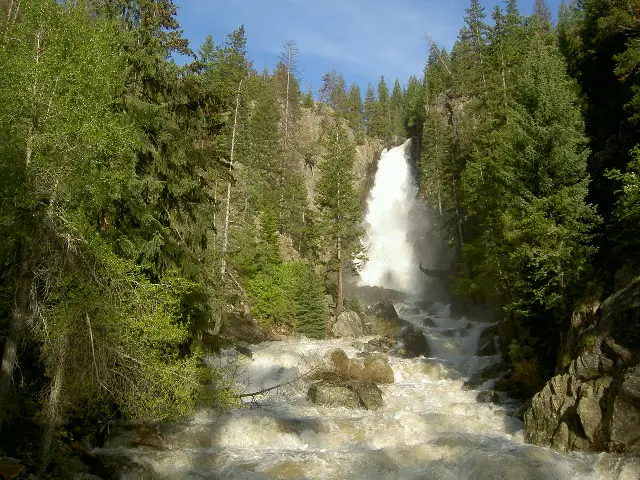
What brings people back to On-Off Falls is how different it looks from one visit to the next. A wet spring week and a dry August afternoon can feel like two different places.
Geology and background
What makes On-Off Falls special
On-Off Falls is in Dinosaur National Monument in Utah, and it stands alone. There is no other named fall within 50 miles, so this is a single-destination visit rather than one stop on a waterfall route. Plan the day around the monument itself, and treat the fall as the reason to be out in that country.
The setting is desert canyon country. Dinosaur National Monument sits where the Green and Yampa rivers cut through the rock of northeastern Utah, and the fall runs in that dry, open ground. Flow here follows rain: after a storm the creek runs, and in a long dry spell it can be thin or gone. That is the trade-off of a desert fall, and the reason to check conditions before you drive.
Navigate by coordinates rather than by name. Map apps often send waterfall searches to the wrong parking lot or the far side of the stream. Download an offline map before you lose signal: this is remote country, and signal is not guaranteed.
Prices and passes
Entry fee: $25.
Best time and crowds
No stream gauge is linked to On-Off Falls, so recent rain is your best guide. Expect the most water in spring and after heavy rain. In a dry spell, especially late summer and early fall, the same fall can look half the size or dry up altogether.
This is a quieter fall than the famous ones, and the trailhead is unlikely to be crowded. Even so, an early start is the best way to have the viewpoint to yourself, and to beat the desert heat.
Safety
Stay on marked trails and behind railings. Wet, mossy rock near the brink is the most common cause of serious injury. Never climb the cascade or stand at the top edge, even when the flow looks gentle. In canyons, rain upstream can raise the water in minutes: leave if the water turns muddy or starts to rise.
What to bring
Shoes with real grip
A rain shell for the spray
Water and a snack
An offline map or screenshot
A dry bag for your phone
A bag to pack out trash
Practical tips
Check recent rain before you go: this fall’s flow depends on it.
Screenshot the directions and these coordinates before you leave town: signal is thin out here.
Carry more water than you think you need: this is desert country.
Check the Dinosaur National Monument page on the day for closures and entry requirements.
Waterfalls mark a change in the ground beneath a stream: a fault, a glacier-cut valley wall, or a band of hard rock the water cannot wear down as quickly as what lies below it.
Water flow and seasons
No stream gauge is linked to On-Off Falls yet, so recent rain is your best guide. The weather panel on this page adds up the last three days of rain at the fall.
Flow tends to peak in spring with snowmelt and seasonal rain, and again for a day or two after a big storm. By late summer smaller falls can drop to a thin ribbon.
The trail and the viewpoint
We do not have a trail length for On-Off Falls yet. Some falls are a few steps from a parking area, others take a real hike, so check the park or a trail app before you set out.
Swimming is not listed. Treat the plunge pool as off-limits unless signs say otherwise: the water at the base is colder and stronger than it looks.
Facilities and amenities
Facilities depend on Dinosaur National Monument: larger parks usually have a signed trailhead, restrooms and a parking area, while smaller reserves may have none of these.
Plan as if there is no drinking water and no phone signal at the falls themselves. Use the restroom and fill your bottles before you start walking.
Fees, permits, and opening hours
An entry fee of $25.00 is listed. Fees change, and some parks charge per vehicle rather than per person, so confirm before you go.
Most falls are reachable from dawn to dusk. Gates, seasonal road closures and timed-entry permits are the usual surprises, so check the managing agency on the day.
How to get to On-Off Falls
On-Off Falls is in Dinosaur National Monument, Utah. For the last stretch, navigate by coordinates (40.5647, -109.0599) rather than by name. Map apps often send waterfall searches to the wrong parking lot or the far side of the stream.
The final approach is usually the hardest part: narrow roads, small trailhead lots that fill early, and a walk that can be ten minutes or several hours. Download an offline map before you lose signal.
Our Utah waterfalls page maps every fall in the state, which helps when you are planning a route.
For the fullest flow, visit On-Off Falls in spring or within a couple of days of heavy rain. For easier footing and warmer air, early summer is the compromise.
Light matters for photos: the base of a fall is often in shade by midday, and an overcast day evens out the bright water against dark rock.
Crowds and timing
Weekday mornings are the quietest. On summer weekends, popular falls can fill their parking by mid-morning, and the viewpoint becomes a queue.
Holiday weekends and the first warm days of spring are the busiest of all. If the lot is full, do not park on the road shoulder: it is the most common reason for tickets and towing at trailheads.
How long to spend there
Without a listed trail length, plan for half a day: enough time to find the trailhead, walk in, spend an hour at the water and walk out without rushing.
If there are other falls nearby, they are often on the same road or trail system. Two or three in a day is very doable.
Where to stay near On-Off Falls
We do not recommend specific places to stay. The links below search for hotels and campgrounds around On-Off Falls on Google Maps, so you can compare drive times from the trailhead.
Leave a waterfall report